The Path of Compassion: A Biography of Hor shul Khenpo Gelek Palsang Rinpoche
The Path of Compassion: A Biography of Hor shul Khenpo Gelek Palsang Rinpoche — Part Two: Hor shul Khenpo Gelek Palsang Rinpoche — Chapter Four: Teaching the Dharma and Benefiting Beings
Today, in the final period of the five degenerations, when only an image of the two aspects of Buddhism—the teachings and realization—remains, some renowned spiritual friends who uphold the teachings look down upon hearing, reflection, and meditation. Regardless of whether they possess the altruistic resolve to benefit Buddhism and become a field of merit for all beings, they compete with one another in building monasteries, buddha images, and stūpas, staging religious dances, and enjoying material provisions, displaying rare and clamorous spectacles. There are indeed many who set the karmic wheels of such affairs in motion.
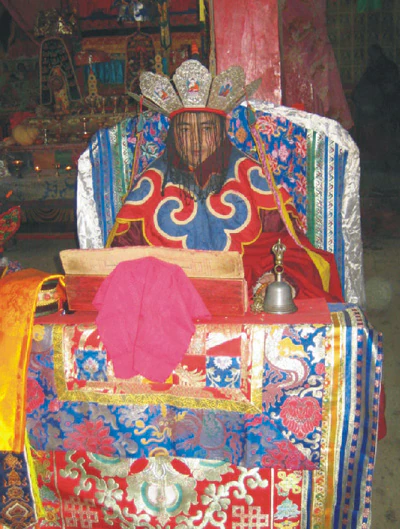
Among them, some of the least worthy do nothing but pursue the worldly affairs of their own monasteries. They abandon hearing, reflection, and meditation altogether and spend their entire lives seeking wealth offered in faith, cultivating the powerful, and speaking grandly for personal gain. Others fall completely into the ruins of this life's disputes and lawsuits, like trying to draw water from gravel. Beyond such things, they never consider how Buddhism might be spread. Nor do the various conditions necessary for Buddhism to flourish come together. These seem to have become common patterns in today's Buddhist world.
Hor shul Khenpo Gelek Palsang Rinpoche, by contrast, devoted his entire life—with the “nine noble traits” of hearing, reflection, meditation, and the rest—to the benefit of Buddhism and beings. Not for a single day did he use Buddhist affairs or favorable conditions for virtuous activity as a pretext to roam lay households in autumn and winter performing paid rites and pursuing the black and white offerings of the dead and the living. Instead, he took the discipline of remaining in a lowly position as his own responsibility and was entirely free from wrong livelihood, such as grand speech in pursuit of profit.
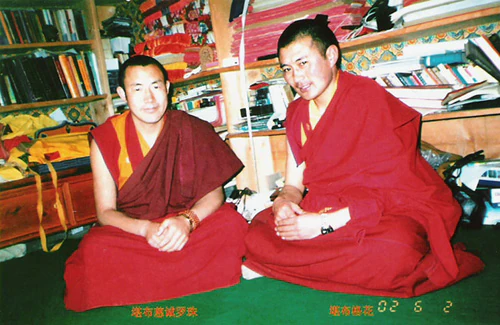
Not even an amount the size of a needle was wasted from the wealth people offered. It was used to construct the three kinds of supports for the Three Jewels, make offerings to teachers and the saṅgha, provide festival and daily offerings, and give aid to the poor, thus opening wide the unobstructed door of the treasury of space. Hor shul Monastery is very old. In the middle of the Tang dynasty, Palgyi Dorje—one of Guru Rinpoche's twenty-five principal disciples and an emanation of Vajrapāṇi—killed the Tibetan king Langdarma, who was then destroying the Buddhadharma, out of powerful compassion, so that the work of Tibetan Buddhism would not be interrupted and in accordance with aspirations from a former life. He later came to Sertar in Dokham and chose to settle at Hor shul. For many years he practiced in retreat on Mount Ala, Mount Mañjuśrī, and other mountains around Hor shul. When the conditions later ripened, he revealed many treasures at these sacred mountains. On Mount Mañjuśrī in particular, he excavated a treasure cave, the Mañjuśrī Cave, and retrieved many treasure objects, including an image of Mañjuśrī Siṃhanāda, which can still be seen today. On the strength of this auspicious connection, the venerable master prophesied that this sacred mountain possessed blessing equal to Mount Wutai in the Han Chinese region and was truly a sanctuary of peaceful Mañjuśrī. Palgyi Dorje Rinpoche founded the first monastery there, Hor shul Monastery, and prophesied that many eminent bhikṣus, khenpos, and other masters would appear at Hor shul Monastery in the future. To this day, among the many monasteries in the region, Hor shul Monastery has the largest number of bhikṣus and khenpos who maintain pure discipline. This comes from the virtue and blessing of Venerable Palgyi Dorje. His contribution to the preservation of Tibetan Buddhism to the present day cannot be overlooked; his kindness to the whole of Tibet was immense.
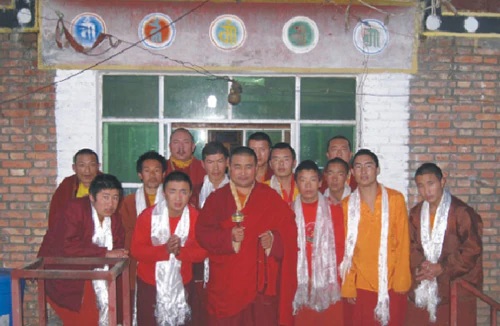
The foregoing describes the special qualities of the sacred land of Hor shul and the origins of its ancient monastery. Hor shul Township is a broad pastoral region with only one central primary school. This single school cannot possibly solve the educational difficulties faced by school-age children from remote and impoverished families. Across Tibet, poverty is the greatest reason that many children of school age cannot attend school. The many causes of children in Tibet losing access to education are described in detail on “Wisdom and Compassion Education,” by Khenpo Sodargye, on the Larung Gar Five Sciences Buddhist Institute's website, the Wisdom and Compassion Buddhist Web. If our descendants cannot read and study or inherit the outstanding traditional culture of their own people, they will readily be affected by harmful outside cultures, causing a break in the continuity of their traditional civilization; the consequences would be unimaginable. In particular, even the number of monastics who preserve the outward form of the Buddhadharma is steadily declining, while genuine practitioners who possess hearing, reflection, and meditation are rarer still. We now live in the degenerate age of the five impurities, the final Dharma period, when the sun of the Buddhadharma has set beyond the western mountains and only its last afterglow remains. Great Buddhist masters as radiant as the sun and moon—Dharma King Jigme Phuntsok and Qiaq Rinpoche—aspired to revive Śākyamuni's teachings through hearing, reflection, and meditation and through the two aspects of teaching and realization. The Khenpo remained deeply concerned about this. He resolved to establish a Buddhist academy beside sacred Mount Mañjuśrī in Hor shul and before Mount Ala, admitting especially poor children who could not attend school so that they could ordain and study. This would, first, preserve the lineage of their people's traditional culture and facilitate teaching the Dharma and benefiting beings; second, it would relieve a concern of the government. Thus he founded this “Tibetan Hope Project,” the Young Lama Buddhist Academy. His immensely kind teachers, Dharma King Jigme Phuntsok and Khenpo Qiaq Rinpoche, instructed Hor shul Khenpo Gelek Palsang Rinpoche that the greatest undertaking of his life was to spread the Buddhadharma.
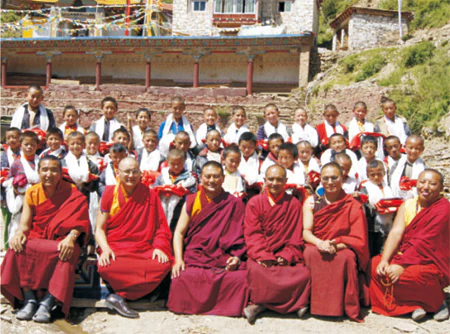
He had the authorization of Dharma King Jigme Phuntsok, the former head of the Larung Gar Five Sciences Buddhist Institute, and a treasure prophecy from Lama Jiaqu, a great yogin who spoke with clairvoyance. There was also a prophecy in ḍākinī script by Ogyen Sherab Rinpoche, the great treasure revealer from Sertar known as Lama Exi, who accurately foretold Dharma King Jigme Phuntsok's time of death. Most exceptional of all was a treasure scripture of Changchub Langba, one of the 108 great treasure revealers and a former incarnation of Xigong Mazhi Rinpoche, in which Ekajaṭī herself told Changchub Langba: “At a place called Hor shul in Sertar, before sacred Mount Ala, an emanation of Avalokiteśvara named Gelek Palsang will found a Buddhist academy. It will benefit limitless beings, greatly help the Buddhadharma to remain in the world, and carry out exceptionally vast activities of teaching the Dharma and benefiting beings. Merely forming a connection with or making offerings to it will plant the seed of liberation in ordinary beings, humans, nonhumans, and all others; free them from the afflictions of illness; bring health, longevity, abundant resources, and the fulfillment of their wishes; purify every karmic obscuration; complete the accumulations of merit and wisdom on the path of practice; enable them spontaneously to take birth in the Blissful Pure Land; and ultimately bring them the noble fruition of awakening.” This prophecy appears in the Collected Works of Changchub Langba. With these authorizations and prophecies, and in accordance with the various conditions, the Khenpo resolved to guide beings of every capacity without weariness during this final Dharma period of the degenerate age of the five impurities. He recognized that the flourishing of traditional culture and the Buddhadharma had to begin with children's education, so that their people's traditional culture would have heirs. To carry on his root teachers' long-held aspiration, and in accordance with prophecies made by many eminent masters while responding to present conditions, he vowed to spread the Buddhadharma. Beginning in the winter of 2005, with the help of numerous Tibetan and Han Chinese disciples and followers, the Khenpo gradually bought houses and land from thirteen Tibetan households before Mount Ala near Hor shul Monastery and founded the Young Lama Buddhist Academy. The site was forty kilometers before the county town of Sertar on the road from Chengdu, beside Hor shul Hydroelectric Station; the Larung Gar Five Sciences Buddhist Institute lies another twenty kilometers farther on.
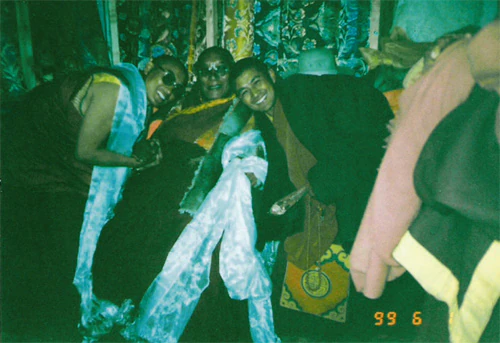
The Young Lama Buddhist Academy primarily admitted children from Hor shul and surrounding areas whose parents had both died, who lived in single-parent families, or whose families were exceptionally poor. The Khenpo personally provided their food, clothing, accommodation, school supplies, and other necessities so that they could ordain and study.
Great Khenpo Tsultrim Lodrö of the Larung Gar Five Sciences Buddhist Institute was delighted when he learned of this undertaking. He visited personally and named the school the “Sertar Larung Hor shul Mañjuśrī Wisdom Buddhist Academy,” signifying a branch of Larung Gar. Thubten Nyima Rinpoche—the reincarnation of the Nyingmapa siddha Do Khyentse Rinpoche, who was widely recognized for overseeing the translation of the Kangyur into English—rejoiced greatly and contributed part of the preparatory funds. The Fourteenth Gyalwa Rinpoche was likewise delighted upon hearing the news, immediately recited prayers of blessing, and scattered flowers of praise. When Hor shul Khenpo Gelek Palsang Rinpoche met Lama Achuk Rinpoche, the Nyingmapa siddha of the sacred meditation place of Yarchen, the attendants were about to introduce him. Lama Rinpoche said, “There is no need for an introduction. I know he is the great Khenpo from Sertar.” He praised the Khenpo as a protector and refuge of beings. A prayer for the Khenpo's long life flowed naturally from his wisdom: “By the great power of the boundless Three Jewels and Three Roots, and the power of Amitāyus and the noble assembly of longevity, may the great spiritual friend, Venerable Hor shul Khenpo Gelek Palsang Rinpoche, remain long in an unchanging life and form.” He also named the Young Lama Buddhist Academy the “Institute for Teaching and Practice of the Buddha's Doctrine.” He prophesied that many great khenpos, siddhas, and eminent masters would appear at the academy in the future. He warmly encouraged the Khenpo, saying that beings in this final Dharma period were suffering and pitiable: “You will have to labor greatly. You are the refuge and protector of all beings.”
One morning, a long-life prayer for Hor shul Khenpo Gelek Palsang Rinpoche arose from the awareness of the Fourth Dodrupchen Rinpoche, who wrote it down immediately and at once sent someone to deliver it to the Khenpo. Many other eminent masters, including Master Nianlong, Tulku Dongga, and Tulku Cicheng Langjiang, helped the academy, recited prayers of blessing, and scattered flowers of praise. The Young Lama Buddhist Academy grew from just over ten children at its founding to more than two hundred. The Khenpo covered all their ordinary clothing, food, accommodation, and education expenses. In recent years, some monastic residences were built, while guardians were found in a nearby township for most of the young lamas. Each month the Khenpo paid living expenses so the guardians could care for the young lamas' daily needs, including hygiene, and attend to their physical and mental health.
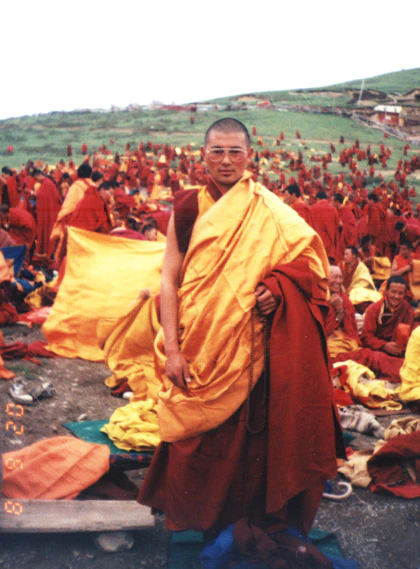
The Khenpo constructed a three-story brick-and-concrete main assembly hall covering more than 1,500 square meters and able to accommodate over a thousand students. He also built a dedicated butter-lamp room and installed a kitchen, dining hall, guesthouse, bathing facilities, and more; the work was completed in the summer of 2010. He invited an authentic heir of Tibet's most renowned hereditary family of image makers to Sertar to cast many supports of enlightened body, speech, and mind in gold and copper. On the first floor, an exceptional and finely crafted great Dharma throne offered by Tulku Cicheng Langjiang was installed in the main hall. At the hall's center stood a Jowo image of the Teacher in saṃbhogakāya attire, the size of the twelve-year-old Śākyamuni Buddha, cast at a cost of roughly five hundred thousand yuan. This Jowo Buddha contained exceptional consecration substances and possessed incomparable blessing; it became the academy's principal support. On either side stood full-size seated images of the two incomparably kind root teachers and protectors, Dharma King Jigme Phuntsok and Khenpo Qiaq Rinpoche. Their expressions and smiles resembled them as they had been, serenely seated in the hall. There were also large images of many yidam deities: the Five Mañjuśrīs, Hayagrīva, Vajrakīlaya, Vajrasattva, White and Green Tārā, Jambhala, and others. Dozens of one-cubit-high images of lineage forefathers from every major tradition were also cast and installed in the first- and second-floor halls. At the center of the second floor stood a Nepalese gold-and-copper alloy image of Thousand-Armed, Thousand-Eyed Avalokiteśvara, together with many other Nepalese images. The adjacent bookshelves held complete sets of the Kangyur, the Collection of the Buddha's Words, and the Tengyur, the Collection of Commentaries; the Six Sūtras of Definitive Meaning, compiling the scriptures taught in the final turning of the wheel of Dharma; the Perfection of Wisdom in Eight Thousand Lines; the Collected Works of the Five Sakya Forefathers; the Collected Works of Xiuchin Tsultrim Rinchen; the Collected Works of Jamyang Amexia; Shalu texts on maṇḍala rituals; a complete set of consecration texts; and an immense number of other scripture volumes. Texts from the Sakya, Nyingma, Kagyu, and Gelug traditions were all complete. Scholarly works on medicine, calendrical calculation, and their commentaries, most of them handwritten manuscripts enclosed in traditional scripture cases, were so numerous that they filled an entire room. The Nyingma Gyubum, the Four Sections of the Heart Essence of Dzogchen, and Longchenpa's Seven Treasuries were also installed, along with many scriptures including the Treatise of the Seven Treasuries and twelve cases of the Hundred-Thousand-Line Perfection of Wisdom. The murals showed the lineages of the three kinds of discipline and portraits of impartial teachers, all painted with exceptionally fine pigments. An exquisite treasure vase also crowned the ridge of the main hall.
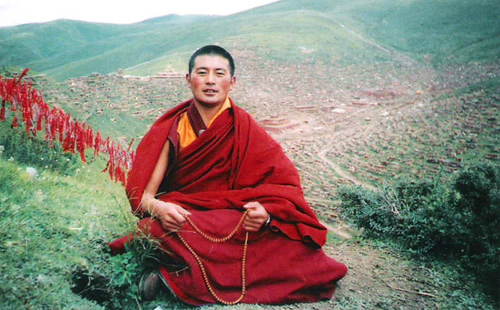
The second floor contained smaller assembly halls and a protector hall, with images of many supramundane protectors, including the Three Roots, Mahākāla, King Gesar, Zima, Amnye Machen, the mountain god Zhuri, and the mountain god Ala, as well as the Khenpo's uncommon protector, Yangchang Jian.
The tantric hall on the third floor held a large central image of Guru Padmasambhava with the two ḍākinīs, Yeshe Tsogyal and Mandāravā. On both sides stood images of the Eight Great Bodhisattvas, symbolizing conduct on the bodhisattva path. The finest Rebgong family of painters in Tibet was invited to cover the ceilings and walls of each hall with many exquisite mural supports, including images of yidam deities. The images of the Five Mañjuśrīs, the standing Eight Great Bodhisattvas, and the copper statues of the two great teachers in the main assembly hall were still relatively rare among Tibetan monasteries. The second floor displayed many kinds of scriptures and buddha images. At the very top stood a several-meter-high image of Thangtong Gyalpo cast in gold and copper, said to avert the disasters of earth, water, fire, and wind in the degenerate age, as well as the various harms caused by māras. A large prayer-wheel house was built outside the hall. Its two great prayer wheels contained one hundred million Vajrasattva heart mantras, one hundred million Mañjuśrī heart mantras, one hundred million Amitābha heart mantras, and many others. A great garuḍa protector image was also erected on the hillside. Dharma King Jigme Phuntsok personally changed and selected its location in the Khenpo's dream of luminous meditative absorption; it had originally been intended for the roof of the prayer-wheel house.
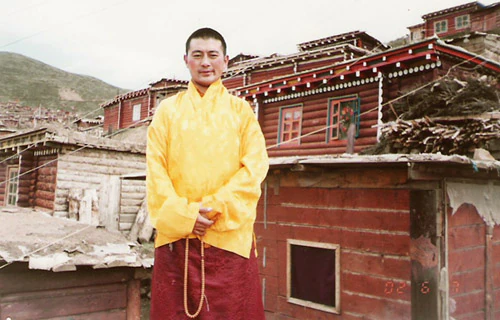
All the images were filled with exceptional blessed substances. These included relics of the seven buddhas of the past; Guru Rinpoche's hair and various belongings; blessed objects of King Gesar and his great generals; blessed objects from sacred sites in India, Tibet, and Han Chinese regions; relics of lineage forefathers of all the major traditions from India through Tibet; and exceptional blessed objects unknown in the human realm, from the nāga realm, the celestial realms, and other worlds. Bhikṣu monastics of pure discipline were invited to recite prayers over a long period, strictly follow the scripture's “ritual for filling sacred images,” properly fill the images, and consecrate and bless them. The images thereby became supports for beings—liberation through seeing. To cultivate merit for the many followers, the Khenpo arranged for monastics to consecrate the images in the assembly hall every day for three years; each day they performed rites for the deceased who had formed connections, recited prayers for all beings who had formed either virtuous or adverse connections with the teacher himself, and prayed that they would be freed from saṃsāra; each day they dedicated the merit to countless followers so that they would receive worldly and transcendent benefit, be freed from suffering, and find happiness. During construction, with time pressing, Hor shul Khenpo Gelek Palsang Rinpoche personally borrowed substantial funds and sold many of his possessions. He even sold his only valuable automobile and devoted immense effort to raising money for the Buddhist academy through many channels. The Khenpo also personally funded khenpos and tulkus of Hor shul Monastery who perfectly possessed the three qualities of wisdom, virtue, and goodness—consummate learning, strict conduct, and a kind heart—to serve as teachers responsible for daily administration and as teaching khenpos. They steadily trained many outstanding monastics skilled and practiced in explaining the principles of scripture and continued training new students without interruption. Feast offerings were made unfailingly on the tenth and twenty-fifth of every month. Under the Khenpo's strict management, the young lamas did very well in their study, practice, and every other respect. He set exacting requirements for them. Ordinarily they had no holidays, attending classes 360 days each year. Their curriculum extended from the initial study of Tibetan grammar to the great treatises: the Dzogchen preliminary practices, the Bodhicaryāvatāra, logic, Madhyamaka, discipline, Abhidharma, and the Abhisamayālaṃkāra. In the tantric teachings, after years of qualified hearing and reflection on the generation stage distinctive to the Nyingmapa, such as the Eight Great Herukas, and the completion stage, they were taught Dzogchen. Some of the young lamas never lay down to sleep; many slept very little at night and memorized large quantities of scriptures and treatises during breaks after class, as many people personally witnessed. They slept late, rose early, and practiced diligently. Many young lamas vowed to remain vegetarian for life. Minor examinations were held every six months and a major examination every year; every young lama had to take the Dharma throne and give an oral teaching examination. At the age of seven, the Third Dodrupchen mounted the Dharma throne to teach the Bodhicaryāvatāra, though he was not yet as tall as the scripture stand. Patrul Rinpoche happily said this was an auspicious sign that the Buddhadharma would not disappear. Eminent masters assessed that these young lamas possessed the same auspicious connection as the Third Dodrupchen, and their examination results were all excellent. Among them were more than ten reincarnations of great tulkus recognized by Lama Achuk Rinpoche and other eminent masters. Many auspicious signs had occurred at their births. Among the most familiar were the reincarnations of Great Khenpo Gaduo of the Larung Gar Five Sciences Buddhist Institute and of Tulku Luozhu Wangbo, the abbot of Luoruo Monastery and a direct relative of Dharma King Jigme Phuntsok. The Khenpo would not permit these recognitions to be made public, lest it affect their future activities. He often instructed them that if they engaged properly in hearing, reflection, and meditation and benefited beings, they could do so without the title of tulku; consequently, few people know of them even today. In important situations, the Khenpo sometimes permitted capable young lamas to act. For example, one day heavy rain fell as the young lamas were returning home from school. In the cloud-covered sky, a small circle of blue remained. Heavy rain fell all around, but none fell in Hor shul; both Han Chinese and Tibetan followers witnessed this repeatedly. When the provisional site for the Young Lama Buddhist Academy was selected, rare auspicious signs such as rainbows appeared in the depths of winter. When the Khenpo and the monastics blessed and consecrated the foundations of the academy's main assembly hall, two rainbows immediately appeared in the sky. During the setting of roof beams and pouring of concrete, it was Tibet's rainy season. The Khenpo arranged for the monastics to halt the rain, and no rain fell during a crucial phase of the construction, allowing the work to be completed smoothly. Even Han Chinese construction workers who had not studied Buddhism developed faith and voluntarily asked to take refuge in the Khenpo and study the Buddhadharma. Some young lamas had innate clairvoyant powers, and whatever they manifested proved accurate. Once they came to the Buddhist academy, however, the Khenpo sternly prohibited them from displaying or speaking of clairvoyance. Khenpo Tsultrim Lodrö often came to teach the Dharma. He told the assembly that a place of practice devoted to hearing, reflection, and meditation was exceptionally rare in the final Dharma period; they possessed immense merit and should rely properly on Hor shul Khenpo Gelek Palsang Rinpoche. Hor shul Khenpo Gelek Palsang Rinpoche occasionally manifested miraculous deeds. In Qinghai, many disciples asked him each New Year to perform divinations and arrange Dharma activities. During the Yushu earthquake, Gongya Monastery suffered no damage. Because benefactor-disciples in Yushu Prefecture asked the Khenpo each year in advance to arrange for monastics to perform Dharma activities, recite scriptures, and so forth, none of his many disciples or their family members were injured or killed; this was widely known. When disciples with great faith and the requisite connection were about to encounter a serious obstacle, he informed them in advance, enabling them to avoid it.
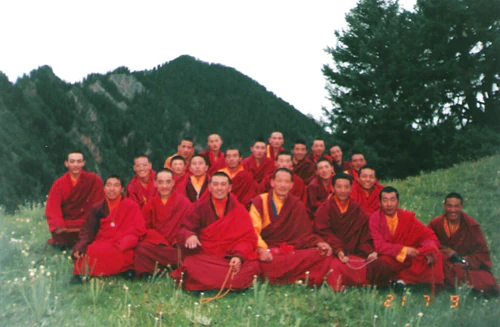
Guru Padmasambhava and Yeshe Tsogyal practiced in retreat at Five-Colored Lake for seven years and seven months. Khenpo Qiaq Rinpoche had likewise spent several years in retreat there when he was younger. The place where Qiaq Rinpoche practiced was a sacred site of practice that many eminent masters yearned and struggled to find, yet it had never been located. After examining it in meditative absorption, Hor shul Khenpo Gelek Palsang Rinpoche followed the thread of interdependent conditions and found the site. Excavation then uncovered bowls and various implements that Qiaq Rinpoche had used during his retreat. Hor shul Khenpo Gelek Palsang Rinpoche subsequently built several retreat cabins there and made a copper image of Khenpo Qiaq. Dharma King Jigme Phuntsok had also spent a long retreat there. The Khenpo has now examined and located that site as well, and a memorial cabin and copper image of Dharma King Jigme Phuntsok are being built. It was also there that Lama Luozhu transmitted profound secret teachings, principally the Seven Treasuries; both Qiaq Rinpoche and Dharma King Jigme Phuntsok were present for those teachings. The Khenpo built images there so that disciples and future generations could readily find the site and know where the teachers had once received teachings and practiced in retreat, thus commemorating them. In luminous meditative absorption, he could repeatedly meet Tulku Eba, Dharma King Jigme Phuntsok, and Khenpo Qiaq Rinpoche and ask them questions. They guided him with their wisdom bodies, frequently made prophecies about the Khenpo's activities of spreading the Dharma, and answered questions and resolved problems. The location of the garuḍa, for example, was personally selected by Dharma King Jigme Phuntsok in the luminosity of the Khenpo's dream. As a bhikṣu of pure discipline, the Khenpo would never invoke his root teachers to tell a grave lie. The Khenpo also taught continually at Hor shul Monastery, Gongya Monastery in Qinghai, the Young Lama Buddhist Academy, and elsewhere. Beginning with the preliminary practices, he taught many sincere, diligent, and intelligent monastics the shared Indian and Tibetan commentaries on the great treatises of Madhyamaka, Prajñāpāramitā, discipline, Abhidharma, logic, and other subjects. In particular, he taught the collected works of the two omniscient masters Rongzom Paṇḍita and Longchen Rabjam and of Patrul Rinpoche. Most especially, he took as his foundation the treatises composed by Mañjuśrī himself in the form of Mipham Rinpoche, embellishing them with the profound instructions, pith teachings, and commentaries taught by Tulku Eba and Khenpo Qiaq Rinpoche. He trained many outstanding scholars skilled and practiced in explaining the scriptural path and repeatedly served as vajra master for the bhikṣu community's annual rains retreat.