The Path of Compassion: A Biography of Hor shul Khenpo Gelek Palsang Rinpoche
The Path of Compassion: A Biography of Hor shul Khenpo Gelek Palsang Rinpoche — Part Two: Hor shul Khenpo Gelek Palsang Rinpoche — Chapter Three: Search and Recognition
Several monks from Gongya Monastery in Nangqian County, Yushu, Qinghai, reached Hor shul in Sertar after a long and arduous search. They said that, according to the observations of many great tulkus, Hor shul Khenpo Gelek Palsang Rinpoche was the reincarnation of their monastery's abbot-tulku. The abbot of Gongya Monastery, Chenlie Gejie, had already taken three successive births under the same name. More than two hundred years had passed since the Third Chenlie Gejie died, without his reincarnation ever appearing again.
Chenlie Gejie Rinpoche was widely recognized as an emanation of Avalokiteśvara. His successive incarnations included Ānanda, the Buddha's attendant; Banan Dunzha, one of the Sixteen Great Arhats; Kou Niu Garao, one of India's Eight Great vidyādharas; Virūpa, one of India's eighty-four mahāsiddhas; Palgyi Senge, one of Guru Rinpoche's twenty-five principal disciples; and Guru Chökyi Wangchuk, the “Second Protector” who revealed the “Seven-Line Condensation of the Mañjuśrī-Nāma-Saṅgīti,” one of the 108 great treasure revealers and among the five great treasure revealers and three great tulkus. They also included Thangtong Gyalpo—the teacher of King Gesar who attained the level of a vidyādhara of longevity and, as an emanation of Guru Rinpoche, remains alive today—and the generals Nipeng Daya and Jialuo Weiyalejie from the time of King Gesar. He later reincarnated in successive lives as Chenlie Gejie, abbot of Gongya Monastery. He too was a great treasure revealer and uncovered many profound treasures. The best known was the “Flesh of the Brahmin of Seven Lifetimes,” which Guru Rinpoche had personally concealed, together with a prophecy that it would later be retrieved by the reincarnation of his disciple Palgyi Senge and would benefit many beings in future generations. It was said that even an ordinary person who had committed grave misdeeds could sever rebirth in the lower realms and attain liberation merely by tasting a piece of the flesh no larger than an ant's foot. This was one of the distinctive Nyingmapa forms of “liberation through tasting,” by which buddhahood is attained without practice. Regrettably, because beings in this degenerate age had heavy karmic obscurations and insufficient merit, a ḍākinī spoke wrongly when the venerable master revealed it, disrupting the auspicious interdependence. He therefore returned it to its treasure place—a cliff behind the monastery. He flew up through miraculous power, and on his return left a handprint by the stone door as a sign for its future retrieval. That handprint can still be seen today.
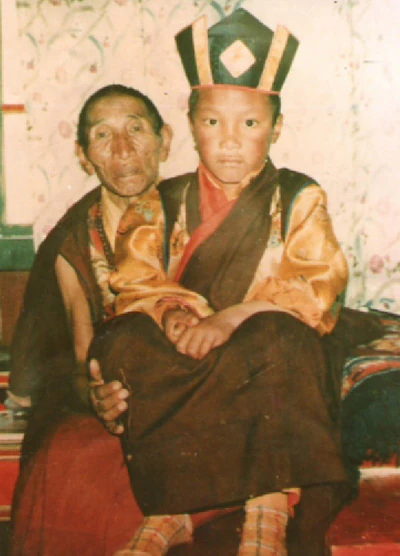
For a long time after the venerable master's passing, his disciples were unable to find his reincarnation. When they went to Tsurphu Monastery and asked the Twelfth Karmapa, who was then alive, “Where has our teacher reincarnated?” the Dharma King replied, “Rinpoche is now guiding boundless beings in the Blissful Pure Land. The conditions are not presently complete, so for the time being he will not come to the human world. When he returns, however, he will benefit beings as countless and limitless as the sands of the Ganges, enabling them all to take birth in the Blissful Pure Land when they die. Do not grieve.” Hearing this, the disciples were overwhelmed with sorrow. They could only pray that their teacher Rinpoche would swiftly return in accord with his aspirations and reincarnate soon. They kept his residence empty, and it remains preserved to this day. In the intervening years they asked several successive Dalai Lamas and DB Dharma Kings, all of whom said that he was still in the Blissful Pure Land and had not reincarnated.
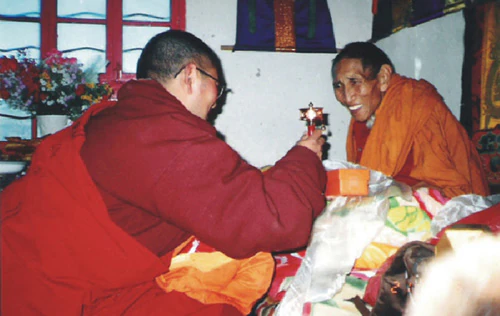
About two hundred years had passed since his death when the conditions finally ripened. Sangjie Danzeng Rinpoche—a great Kagyu master, teacher of the Seventeenth Karmapa, and current abbot of Gongya Monastery—and many great tulkus employed numerous secret methods, including guidance from ḍākinīs, clairvoyant observation, and divination. They wrote down a place-name and the parents' names and drew a secret diagram, all pointing to Sertar in Sichuan, a thousand li away. The masters promptly sent monks who endured countless hardships before reaching Sertar and finding Hor shul Khenpo Gelek Palsang Rinpoche, the venerable master's reincarnation. Their leader was Khenpo Cicheng Langda, who succeeded Thrangu Rinpoche as a teacher of the present DB Dharma King and served as dean of the Buddhist academy at Tai Situ Rinpoche's monastery in India. At the time, the reincarnation of the Eighth Detong Aga Gejie, another great treasure revealer of Gongya Monastery, had likewise remained undiscovered for many years. Sangjie Danzeng Rinpoche had himself perceived that Hor shul Khenpo Gelek Palsang Rinpoche was also Detong Aga Gejie's reincarnation, but told no one. He later asked Tai Situ Rinpoche in person to examine the matter. Smiling, Rinpoche said, “You already know—it is the one in your mind.” Hor shul Khenpo Gelek Palsang Rinpoche was the only tulku whom Sangjie Danzeng Rinpoche recognized in his lifetime and was held to be the shared reincarnation of Gongya Monastery's two great treasure revealers. After he was invited back to Gongya Monastery in Qinghai, many eminent masters subjected him to repeated tests. Without any guidance, the Khenpo found his former residence and identified the ritual implements and belongings from his previous life.
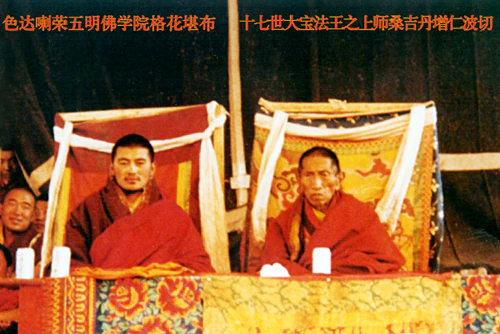
Sangjie Danzeng Rinpoche, the head of Gongya Monastery and a teacher of the Seventeenth DB Dharma King, had long wished to invite Hor shul Khenpo Gelek Palsang Rinpoche back to reside permanently at the monastery, enthrone him, and install him as abbot. He repeatedly offered Hor shul Khenpo Gelek Palsang Rinpoche's home region his body's weight in gold and silver as ransom, but Qiaq Rinpoche never granted permission, and Hor shul Monastery likewise refused to release him. After repeated petitions from the Yushu prefectural government, the monastery's monastics, and Sangjie Danzeng Rinpoche's emissaries, Qiaq Rinpoche observed that the conditions had ripened when Hor shul Khenpo Gelek Palsang Rinpoche was in his twenties and agreed to let him return to the monastery of his former life to turn the wheel of Dharma extensively. For several consecutive nights, a number of clairvoyant monks at Gongya Monastery all had the same dream: a great door opened on the north side of the main hall, and many offering goddesses floated in, holding the Eight Auspicious Symbols, the Seven Precious Possessions of a Universal Monarch, and other offerings, as they ushered in a great Dharma throne. Unable to understand it, they asked Sangjie Danzeng Rinpoche what it meant. He said it was a sign that the former abbot was returning. There was no door on the north side of the hall, yet the Khenpo did indeed come to Gongya Monastery from the north. After traveling more than a thousand kilometers from Sertar in Sichuan, Hor shul Khenpo Gelek Palsang Rinpoche received grand welcomes from every level of government and from monasteries of all the major traditions as soon as he entered Qinghai. Sangjie Danzeng Rinpoche and the monastic and lay communities of Nangqian County in particular received him with the highest honors. Once the Khenpo was settled in his former residence, the local people rejoiced greatly,
bowing and praying continually toward Hor shul Khenpo Gelek Palsang Rinpoche's residence each day. Many people found multicolored relics. The local people respectfully called him Sertar Geba Rinpoche. The cliffside retreat cave in which the Khenpo had practiced in his former life was high above the ground and inaccessible to ordinary people. The former tulku Chenlie Dorje possessed great miraculous power and often flew up and down, using his powers to carry firewood and other things. When the Khenpo offered a khata, it floated upward of its own accord. Many people personally saw a seven-colored rainbow stream from the cave entrance, connect with the Khenpo, and lift the khata upward. This inspired immense faith in those present.
Sangjie Danzeng Rinpoche especially requested Hor shul Khenpo Gelek Palsang Rinpoche to turn the wheel of Dharma extensively and teach the monastics of Gongya Monastery's Buddhist academy the sutric and tantric teachings of the Kagyu and Nyingma systems. The Khenpo gave those who had renounced worldly life and were undertaking a strict three-year-and-three-month retreat the profound pith-instruction guidance of the great tantra of the Early Translation school. To the broad community of followers, primarily local people, he taught the authentic Dharma, including teachings on Guru Padmasambhava and the Guide to the Blissful Pure Land. Auspicious signs appeared during the teachings, including rainbows and relics falling from the sky. Some people still preserve relics from that time, and many continue to multiply. At the “Great World Peace Dharma Assembly” in Qinghai, Hor shul Khenpo Gelek Palsang Rinpoche bestowed empowerments of Guru Rinpoche, Amitābha, Avalokiteśvara, and the “Seeds of Liberation—Forced Liberation from the Lower Realms,” a treasure teaching of Dharma King Jigme Phuntsok, upon more than one hundred thousand followers. From then on, Hor shul Khenpo Gelek Palsang Rinpoche's renown spread far and wide, and when other traditions held great Dharma assemblies, they often invited him to serve as the principal vajra master.
There is an interesting story from shortly after his return to Qinghai. Some people doubted Hor shul Khenpo Gelek Palsang Rinpoche: Chenlie Gejie had not reincarnated for so long—was this Khenpo from Sertar truly the reincarnation of Tulku Chenlie Gejie? Someone therefore telephoned the Sakya Dharma King in the United States, asking him to use clairvoyance to discern whether the recognition was genuine and whether it was permissible to attend the Sertar Khenpo's empowerments. The Sakya Dharma King replied personally that, after detailed examination, Sertar Khenpo Geba was unquestionably the genuine reincarnation of Tulku Chenlie Gejie; forming a Dharma connection with him was an excellent source of merit and presented no problem whatsoever. This firm recognition by the Sakya Dharma King Rinpoche, whose clairvoyance was regarded throughout Tibet as the most reliable, spread among the wider community of followers. The Khenpo's virtuous activities of vigorously advancing teaching and practice became a supreme ambrosial medicine for the Dharma and beings. The masters praised him: “Khenpo Geba is an erudite master of the Tripiṭaka—Sūtra, Vinaya, and Abhidharma—and a great scholar who has mastery of the three trainings—discipline, meditation, and wisdom.” Thus they scattered flowers of praise.
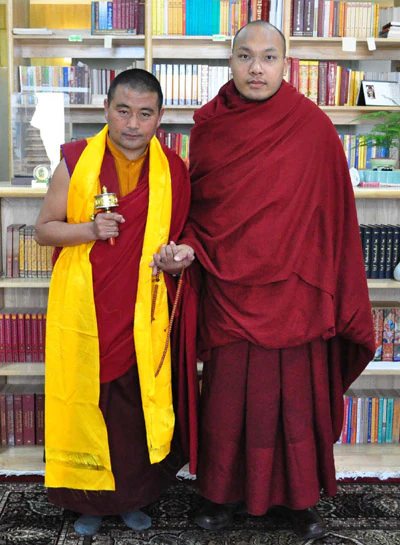
Sangjie Danzeng Rinpoche once taught the monastic community: “Everyone at this monastery acknowledges that Khenpo Geba (Hor shul Khenpo Gelek Palsang Rinpoche) possesses qualities uncommon to other khenpos. Through several channels, authorization has also been received from the DB Dharma King, the Karmapa, to appoint him as a khenpo of this monastery. This matter was explained to all the student-monks of the teaching college and to the public. Although I have repeatedly tried to appoint the Khenpo himself as abbot of this monastery, my wish has not been fulfilled. If he remains unwilling to accept, this old monk can in future urge him to do so in accordance with the monastic community's wishes.” Sangjie Danzeng Rinpoche regarded Hor shul Khenpo Gelek Palsang Rinpoche as a tulku of Gongya Monastery and intended him eventually to succeed to his own position. Sangjie Rinpoche personally wrote and sealed a recognition document, which is now in Hor shul Khenpo Gelek Palsang Rinpoche's possession.
Sangjie Danzeng Rinpoche once taught the monastic community: “Here at our monastery, Khenpo Geba (Hor shul Khenpo Gelek Palsang Rinpoche),
as everyone recognizes, possesses qualities uncommon to other khenpos. Through several channels,
authorization has also been received from the DB Dharma King, the Karmapa, to appoint him as a khenpo of this monastery.
This matter was explained to all the student-monks of the teaching college and to the public.
Although I have repeatedly tried to appoint the Khenpo himself as abbot of this monastery, my wish has not been fulfilled.
If he remains unwilling to accept, this old monk can in future urge him to do so in accordance with the monastic community's wishes.”
Even the Seventeenth DB Dharma King personally issued a letter of appointment, but Hor shul Khenpo Gelek Palsang Rinpoche still did not wish to go. Followers in Qinghai repeatedly wept as they begged the Khenpo to reside permanently at Gongya Monastery. Sangjie Danzeng Rinpoche likewise tried several times to compel him to take charge of the monastery. The Khenpo, however, remained humble and never agreed, though he promised to visit Qinghai often. Until his passing in 2002, Sangjie Danzeng Rinpoche was unable to realize his wish of handing the monastery over to the Khenpo, which he deeply regretted. For a detailed account, see “The Teaching of Sangjie Danzeng Rinpoche.”
In March 1997, as the magnificent form of the supreme protector and teacher Qiaq Rinpoche was about to dissolve into the dharmadhātu, he gave the Khenpo his Dharma hat and many personal belongings, entrusted him as his true successor, and bestowed many teachings upon him with boundless affection. At the thought that the teacher and disciple, like father and son, were about to part, the Khenpo felt the agony of having his eyes gouged out and his heart cut open and shed tears of great sorrow. Having given his final instruction, the master manifested the withdrawal of his wisdom mind into the dharmadhātu, and the darkness of grief instantly enveloped the world.
The Khenpo shared responsibility for the affairs following Qiaq Rinpoche's passing. During the cremation, Great Khenpo Xirao specifically asked him and Tulku Thubten Longdo to go up, saying, “You are the teacher's true heart-sons. Today extraordinary auspicious signs will certainly occur.” Later, Qiaq Rinpoche's complete crown of the skull sprang from the furnace—unburned and perfectly intact after the cremation—and landed directly in Hor shul Khenpo Gelek Palsang Rinpoche's arms. It burned a hole in the sleeve of his robe, which is still preserved, while a bone landed on the tulku. The masters who witnessed the event all said, “Judging from this auspicious connection, Hor shul Khenpo Gelek Palsang Rinpoche appears to be Rinpoche's true Dharma heir.” Great Khenpo Xirao said that Hor shul Khenpo Gelek Palsang Rinpoche was unquestionably and indisputably the teacher's true heart-son. Dharma King Jigme Phuntsok, head of the Larung Gar Five Sciences Buddhist Institute in Sertar, had come to attend the ceremonies following Qiaq Rinpoche's passing and invited the Khenpo to reside permanently at Larung Gar.
After completing all matters concerning his teacher, Hor shul Khenpo Gelek Palsang Rinpoche accepted the invitation and went to Larung Gar. Dharma King Jigme Phuntsok placed great importance on Hor shul Khenpo Gelek Palsang Rinpoche in matters of the Buddhadharma. He said, “Hor shul Khenpo Gelek Palsang Rinpoche earned his khenpo certificate under the Venerable Khenpo Qiaq. It is not the same as the certificates of other khenpos.”
Dharma King Jigme Phuntsok appointed him the senior khenpo responsible for teaching the academy's tulku class and also chief steward of the academy's “Samantabhadra Cloud-Offering Company.” At Larung Gar he was commonly known as “Hor shul Khenpo Gelek Palsang Rinpoche.” Most khenpos who earned their degrees at the academy participated in its teaching and administration. Many others who had received khenpo degrees at other monasteries also came to reside at Larung Gar. Among these outside khenpos, only Hor shul Khenpo Gelek Palsang Rinpoche and Khenpo Zhuzha of Dzogchen Monastery were appointed to teach and participate in the academy's internal administration. Khenpo Zhuzha was the reincarnation of Patrul Rinpoche. When the Dharma King privately transmitted tantra and Dzogchen to certain khenpos, ordinarily only those trained at Larung Gar could participate. Among khenpos not trained there, he allowed only Hor shul Khenpo Gelek Palsang Rinpoche and Khenpo Zhuzha to attend, naming the two personally.
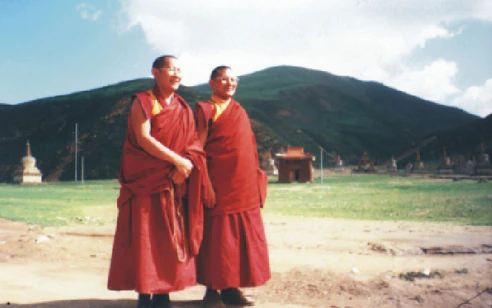
Dharma King Jigme Phuntsok repeatedly praised Hor shul Khenpo Gelek Palsang Rinpoche before gatherings of more than ten thousand monastics. Together with his younger sister, the ḍākinī Ani Meizhu, and Master Mencuo, he repeatedly gave him supports of enlightened body, speech, and mind, as well as many utensils and other articles. All of them were delivered by Lama Suodeng, Dharma King Jigme Phuntsok's personal attendant and steward.
Dharma King Jigme Phuntsok held Khenpo Tsultrim Lodrö in very high regard, yet even Khenpo Tsultrim Lodrö could not always see him. Hor shul Khenpo Gelek Palsang Rinpoche, by contrast, was permitted to visit him at any time. The Dharma King often sent Hor shul Khenpo Gelek Palsang Rinpoche food and clothing—sometimes food, sometimes cushions, blankets, or bedding—generally once every two weeks. After some time Hor shul Khenpo Gelek Palsang Rinpoche would think that the Dharma King must be about to send something, and it would indeed arrive. At times the Dharma King would say, “Hor shul Khenpo Gelek Palsang Rinpoche must have run out of food,” and then send food to him. In short, both the Dharma King and the Venerable Khenpo Qiaq attached great importance to Hor shul Khenpo Gelek Palsang Rinpoche.
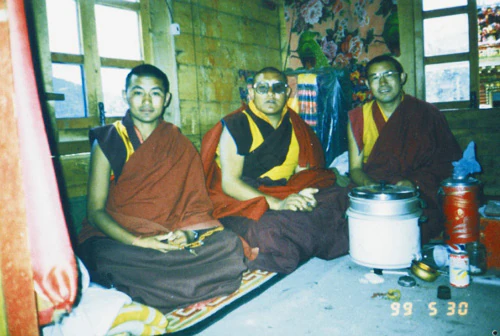
Khenpo Qiaq never criticized Hor shul Khenpo Gelek Palsang Rinpoche or displayed anger toward him, and the Dharma King likewise never criticized him. Hor shul Khenpo Gelek Palsang Rinpoche said that while relying upon these two teachers, he never once broke a rule, and no one around him ever said that he had done anything wrong. He regarded this as the greatest virtue of his life, and his teachers felt that he possessed the qualities necessary to accept disciples.
One year, Great Khenpo Tsultrim Lodrö invited a great yogic physician from Qinghai to teach the Four Medical Tantras at the academy. During his stay, the physician asked Great Khenpo Tsultrim Lodrö for an introduction because he wished to receive at the academy a profound secret Dharma whose lineage was very rare in Tibet. The great Khenpo directed him to Hor shul Khenpo Gelek Palsang Rinpoche, saying that no one at the academy held more lineages, including many uncommon ones, and that numerous khenpos and tulkus at the academy had received many transmissions from him.
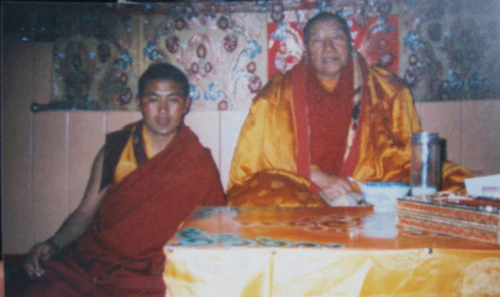
While residing at the Larung Gar Five Sciences Buddhist Institute, Hor shul Khenpo Gelek Palsang Rinpoche received numerous empowerments, guidance, and instructions of the Early Translation Nyingma tradition from Dharma King Jigme Phuntsok and Master Mencuo. On one occasion in his own room, Dharma King Jigme Phuntsok privately bestowed an extremely secret longevity empowerment to dispel obstacles to the lives of only a very few great tulkus, including Lama Achuk Rinpoche, Xigong Mazhi Rinpoche, Dodrupchen Rinpoche, and the treasure revealer Tenzin Wangyal, praying that they would remain for a long time. Hor shul Khenpo Gelek Palsang Rinpoche was among them. On another occasion, in the nuns' assembly hall, Dharma King Jigme Phuntsok privately bestowed exceptionally secret and profound pith-instruction guidance on Dzogchen from a treasure teaching upon the institute's great tulkus and senior khenpos; Hor shul Khenpo Gelek Palsang Rinpoche was again among them. Hor shul Khenpo Gelek Palsang Rinpoche made an offering of his realization to Dharma King Jigme Phuntsok and received the Dharma King's confirmation and approval. The Dharma King commended him, gave him his own ancestral bhikṣu robe, and authorized him to transmit all of the Dharma King's teachings to others. On the sixteenth day of the eleventh month of 2003 according to the Tibetan calendar, because the merit of the beings to be guided did not accord with their needs, Dharma King Jigme Phuntsok—the heart of the Great Secret teachings, supreme protector of beings, and vajra-holder teacher—passed away. Heaven, earth, sun, and moon lost their radiance. Having lost another root teacher, the Khenpo was overcome with grief. In the observances following Dharma King Jigme Phuntsok's passing, the institute appointed Hor shul Khenpo Gelek Palsang Rinpoche as one of those responsible for the memorial Dharma assembly. He recited prayers before the teacher's body in the inner maṇḍala and made extraordinary vast aspirations. His principal teachers had now passed away, but the Khenpo followed their instructions and continued the work of spreading the Buddhadharma extensively. Each winter he traveled to Han Chinese regions to guide beings. Most who took refuge in him had never before studied Buddhism. Those who already had a teacher were told to rely properly on their own teacher instead of running blindly from one teacher to another. Every year, the Khenpo carried out extensive animal-release activities in both Tibetan and Han Chinese regions. Hundreds of thousands of yaks alone were released. Through his influence, all of Hor shul vowed to refrain from killing, and today no one there takes life.
While making offerings in Qinghai before a naturally formed five-in-one image of Great Compassionate Avalokiteśvara, he obtained some relics. When bestowing upon the monastic community at Sakya Monastery the empowerment of the treasure teaching Black Wrathful Deity, the skull used as the empowerment support became warm by itself without his hands touching it.
Later, during a longevity practice at Gongya Monastery, the longevity nectar—longevity alcohol—that had been set out did not spoil in summer or freeze in winter. It turned purplish yellow and became extremely thick, welled upward, and emitted a fragrance. These were all wondrous and unrepeatable signs.
When people with karmic connections first met the Khenpo, they saw him in various forms, including that of Thangtong Gyalpo. While he bestowed an empowerment of the Essential Heart of the Noble Lady upon a virtuous person, that person saw the Khenpo with seven distinct eyes. His faith surged, and he fainted. Such extraordinary deeds were too numerous to recount.
Although pure appearances and encounters with yidam deities arose for him continually in actual experience, meditative experience, dreams, and other states, Hor shul Khenpo Gelek Palsang Rinpoche never spoke of them except when there was a special need. When others reported manifestations of the venerable master that they themselves had seen, he merely said, “What could a person in whom the wind element has arisen be unable to know or see? Nothing about such things is trustworthy.” To subdue pride, he occasionally revealed only a little. In addition, Hor shul Khenpo Gelek Palsang Rinpoche repeatedly beheld the wisdom body of Tulku Eba, who taught him the sutric and tantric Dharma. In the luminosity of dreams he could at any time meet Dharma King Jigme Phuntsok and Khenpo Qiaq in their wisdom bodies, ask them about the Dharma, and receive their prophecies about the future. The Khenpo also heard teachings from buddhas, bodhisattvas, vidyādharas, ḍākinīs, and other noble beings, eliminating additions to and omissions from their words and meaning. Among his countless rare deeds, he uttered many mantra tantras in vajra sound, sang exquisite vajra songs, and held a stream of Dharma with profound meaning.
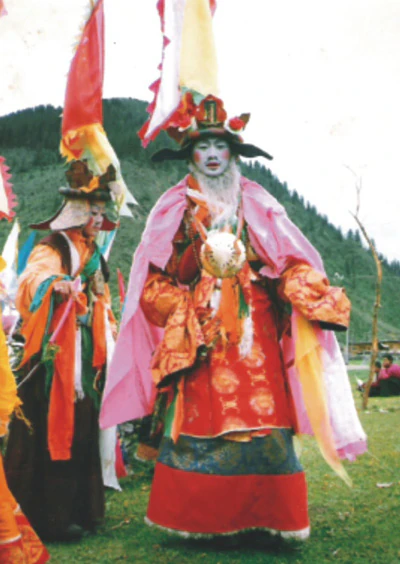
In the cave where he had practiced in a previous life, at the final dawn of a seven-day practice of the Red-Yellow Mañjuśrī Nectar Pills, an immense sphere of red-yellow light appeared above the maṇḍala before him. Within it, a blue lotus that had only recently opened appeared for an instant and then dissolved into Hor shul Khenpo Gelek Palsang Rinpoche's heart. From that time onward, the eloquence and power of his wisdom grew ever stronger, and he could speak to anyone on any subject without impediment.
Once, while staying at a benefactor's home in Qinghai, the Khenpo dreamed that he and Venerable Longchenpa were seated together on a high, broad cushion. The venerable master tossed into the air barley offered to the deities and commanded an ocean of Dharma protectors to safeguard the Khenpo's activities without fail. He also recited many auspicious verses, both worldly and transcendent.
In short, even dreams of this kind were mentioned only when necessary; ordinarily the Khenpo never spoke of them.
Nowadays, some people seem able to know accurately the past lives, future lives, intermediate states, and virtuous or harmful qualities of everyone when no prophecy is needed. Their words spread through every street and alley, regardless of whether any prediction proves true. Yet when a prophecy is genuinely needed, they know nothing. Although the Khenpo often said, “I have no clairvoyance,” everything he said about important events and when they would occur was fulfilled.
In short, the Khenpo was a great bodhisattva whose qualities of abandonment and realization and whose level of direct realization were inconceivable. Thus not only could the true situation not be proclaimed, even its merest surface could neither be known nor expressed.
The Maitreya Lion's Roar Sūtra says:
To fill worlds as numerous as the sands of the Ganges with gold and give it all away; to teach or recite a single verse in this impure, degenerate age—the merit of the latter is more excellent than the former.
In this exceptionally impure age, although qualified vessels worthy of receiving Dharma are extremely rare, the Buddha taught that speaking even a single verse of Dharma, when guided by an exceptional wish to spread the Dharma and benefit others, brings limitless benefit and merit. In accordance with the Buddhist scriptures, the Khenpo tirelessly and continually gave the authentic Dharma, without weariness, aversion, or discouragement, to beings of high, middling, and lower capacities, beginning with the great spiritual friends who upheld the teachings. In particular, he ensured that the unbroken stream of people who came seeking Dharma all returned satisfied. Most men and women in Qinghai came to meet him. To them, the venerable master continually bestowed Dharma connections suited to their faith and inclinations, principally longevity empowerments and transference of consciousness.
In summary, he disparaged no tradition, cultivated an impartial pure perception, and did not mix different traditions together; he was therefore respected by all major traditions. He had mastered the sutric and tantric teachings and possessed an ocean of learning; through the wisdom born of hearing and reflection, he knew without confusion the essential points of his own tradition; through contemplation and meditation, experience and realization arose; he had the capacity to resolve doubts with universally acknowledged great wisdom, impartially mastering the meaning of the sutras and tantras down to such minutiae as letters and symbols. He maintained discipline as strictly in private as in public, and his conduct could be measured against the Buddhadharma itself. Upright and kind, free of selfishness, and pure as refined gold, he was praised by the wise. When he taught, it was as though he had received the blessing of an exceptional yidam: whatever scripture he explained, he relied on no book and spoke without deliberation, naturally and without obstruction, as easily as reciting maṇi, the six-syllable mantra. In debate, no matter how his initial thesis was challenged, he could establish it through scripture and valid reasoning. Apart from deepening understanding, there was never a case in which contradictions above and below appeared without his recognizing them. When composing, even if he wrote many verses, they flowed as though already memorized; beyond dictating them, he needed no thought or consideration, and there were no defects of expression. With wisdom that knows, he saw the particular and universal characteristics of all knowable phenomena in their full extent and had realized the wisdom mind of reality as it is. Through compassion, without partiality, he worked solely for the benefit of Buddhism as a whole and of beings. The Khenpo was upright and fair-minded. Regarding the tenets of religious traditions and worldly virtue and wrongdoing, he showed no bias toward those close to or distant from him. He understood impartially and spoke honestly, earning the unanimous respect of the wise, just as the saying goes:
Like snapping a straight ink-line, he obstructed crooked and dishonest minds.
Moreover, he never engaged in such conventional religious affairs as performing household rites for payment or showing preference according to the size of an offering. Even in dreams, the Khenpo did not engage in worldly matters such as destroying enemies and supporting friends, commerce or farming, or favoring relatives and associates. If, while traveling, he received even a modest invitation, he fulfilled whatever people hoped to do and never declined on the pretext, “I am a recluse.” Nor, when merely placing his hand on someone's head in blessing, did he make a show of fearing that his life was about to be cut short.
Whatever wealth the Khenpo received, beyond what was used for ordinary daily needs and immediate virtuous purposes, he did not accumulate or preserve for the long term. He did not waste even a little money on unsuitable recipients, such as monastic attendants or relatives who had no fear of karmic cause and effect, or flatterers. He made no elaborate arrangements for long-term living, nor did he weep before crowds while talking theatrically about renunciation.
Toward his teachers, the Khenpo was not one who schemed and showed deferential flattery to their faces while privately calling them by name, clan, or nickname with utter disrespect. Instead, he addressed his teachers only with honorifics such as “Vajradhara” and “Rinpoche.” His expression of reverence and trust was inconceivable, and his faith never changed or declined. This alone was a supreme and uniquely venerable deed that none of today's self-important great teachers or disciples could equal, openly or in private.
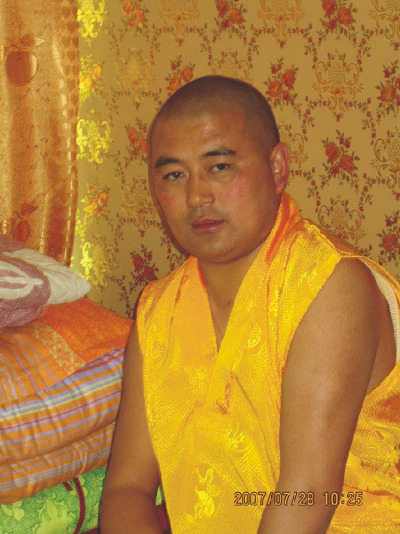
In general, the depth of the Khenpo's mind was impossible to fathom. Outwardly, however, he resembled neither stubborn people who cannot listen to anyone's request or explanation, nor arrogant scholars, irascible adepts, or narrow-minded people. Instead, he appeared humble and accommodating in all circumstances. Yet when major events arose, people who regarded themselves in Dharma matters as exceptional masters, scholars, miracle workers, clairvoyants, or mantra practitioners—and those who, in worldly matters, boasted of knowledge, virtue, courage, and strategy, appearing like tigers or lions—would long since have cast aside their earlier ideas. Their hearts nearly leaping from their throats, they dared not look back and thought only of fleeing for their lives. Or they defected to the enemy and accepted the enemy's empowerment, signifying an oath of allegiance, thereby harming themselves and others; their bewildered conduct turned ceaselessly like a magical machine, driven by grasping and obstinacy. Or, discarding conscience and the karmic results of this and future lives like dirt and stones, they used the boulder of base, despicable misconduct to demolish completely the earthen mound of worldly convention.
The Khenpo was not swayed by what people said, and no one could change the nature of his mind. With people of superior, middling, or lesser capacity, he spoke calmly and in detail about stainless reality, without mixing in conjecture or resorting to dull and obscure speech. He made no distinction between what could be discussed in an inner room and what could be said outside, but imparted everything with ease. Especially when recounting the Kadampa forefathers' way of teaching, his teachers' instructions, the venerable masters' activities, and other remarkable stories, he gave extremely precise dates, numbers, sources, and reasons.
At gatherings of scholars and important people, he did not flatter anyone to preserve appearances. He showed not the slightest timidity, but spoke with neither servility nor arrogance, fairly and uprightly. He never treated ordinary people, the elderly, women, or children with contempt or pride. Instead, he conversed with and praised them calmly, at ease and unconstrained, with natural humor rather than affectation, and often offered comfort. Even so, through the awakening of former karma and the power of the meditative concentration within him, he possessed exceptional yogic discipline capable of subduing people of every rank, so all held him in awe and paid homage.
At the most important junctures in projects large or small, the Khenpo asked only one or two teachers whom he trusted from the depths of his heart to examine the matter. He combined their guidance with his own requests to the teachers and the Three Jewels for prophetic examination. Other undertakings that did not conflict with the Dharma and accorded with worldly convention he examined and decided himself, without consulting or discussing them with a crowd. Concerning this, the venerable master said, “When we are first born, we are born alone, and when we finally die, we also die alone. For these two most important events, there is not even anyone with whom to discuss matters or from whom to seek advice. What could there be in this life that one cannot decide oneself?”
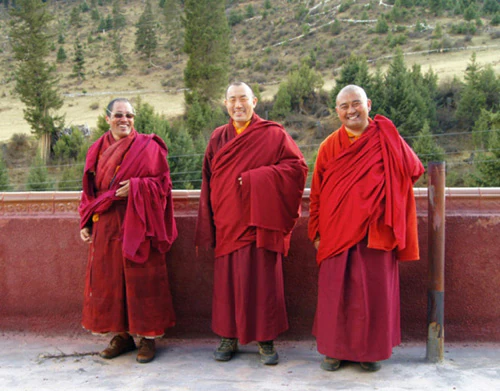
When others asked him to help them make a decision, he would say, “I have no clairvoyance. We are all persons who possess human bodies and understand meanings in accordance with the Dharma. We rejoice if what we seek is obtained or what we do not want fails to occur. So-called ‘advice’ is only the deluded thought, ‘What should I do?’ or ‘What would be best?’ Yet it is like hoping to become rich only to ‘draw water with a bamboo basket and end with nothing.’ How could heaven fulfill every human wish? It is also like a beggar becoming rich in a dream—how could everything occur merely because one thinks it? Therefore, I know no prophecies concerning any person or matter.”
In short, when people gathered and he taught the Dharma, the venerable master spoke only about generally applicable matters of what to adopt and what to avoid. Apart from these, he never lectured or instructed others, “You should do this! You should not do that!” He also admonished: “As Dromtönpa said, ‘Do not admonish those who are obstinately incorrigible.’ Today, one may have hundreds of disciples, but it is hard to find even one or two who will truly listen to the teacher. One may have a hundred sons, but it is hard to find even one or two who are filial. What can instruction and guidance accomplish for such people other than making oneself and others angry?” Thus he never made decisions for others. To those who sincerely trusted him, he offered a single piece of counsel only after making detailed supplications to the Three Jewels for a prophecy; otherwise, he did not speak nonsense that deceived disciples. Apart from recollecting the deeds of the teachers, what else was there to say?